Web design
Web design Teams
Web design encompasses many different skills and disciplines in the production and maintenance of websites. The different areas of web design include web graphic design; user interface design (UI design); authoring, including standardised code and proprietary software; user experience design (UX design); and search engine optimization. Often many individuals will work in teams covering different aspects of the design process, although some designers will cover them all. The term "web design" is normally used to describe the design process relating to the front-end (client side) design of a website including writing markup. Web design partially overlaps web engineering in the broader scope of web development. Web designers are expected to have an awareness of usability and if their role involves creating markup then they are also expected to be up to date with web accessibility guidelines..
html, css, & javascript
HyperText Markup Language (HTML), Cascading Style Sheets (CSS), and JavaScript are the languages that run the web. ... HTML is for adding meaning to raw content by marking it up. CSS is for formatting that marked up content. JavaScript is for making that content and formatting interactive.
As you can see, HTML, CSS, and JavaScript are totally different languages, but they all refer to one another in some way. Most websites rely on all three, but the appearance of every website is determined by HTML and CSS. That makes this tutorial a great starting point for your web development journey.
Dealing with these complexities involves setting up various “environments” to organize your files and handle the building/deploying of your website. All of this is orthogonal to the actual HTML, CSS, and JavaScript code that make up a website.
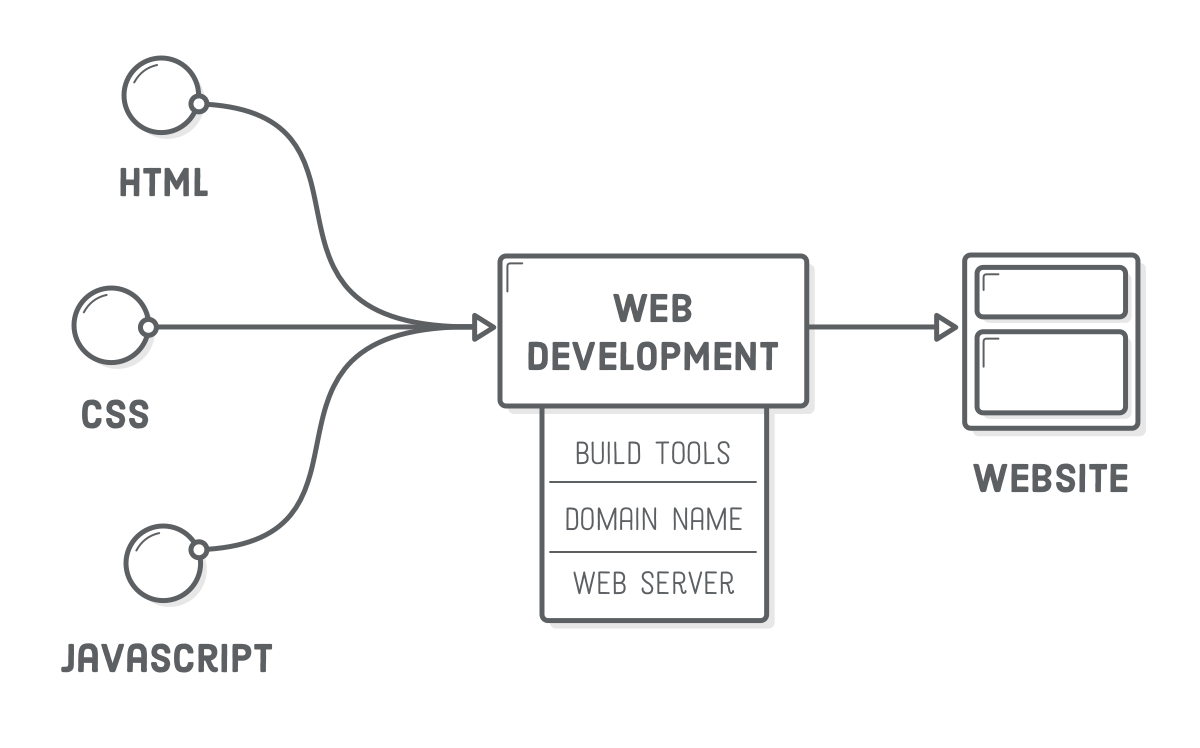
Gaining fluency in HTML and CSS is a significant first step towards becoming a real web developer.
Bootstrap
Build fast, responsive sites with Bootstrap
Quickly design and customize responsive mobile-first sites with Bootstrap, the world’s most popular front-end open source toolkit, featuring Sass variables and mixins, responsive grid system, extensive prebuilt components, and powerful JavaScript plugins.
Lists software
Link software
NOTE
Unfortunately, mastering HTML, CSS, and JavaScript is only a prerequisite for becoming a professional web developer. There are a bunch of other practical skills that you need to run a website:
- Organizing HTML into reusable templates.
- Standing up a web server.
- Moving files from your local computer to your web server.
- Reverting to a previous version when you screw something up
- Pointing a domain name at your server.
link
Useful links
| Name | Link | Refrence |
|---|---|---|
| Item 1 | https://www.w3schools.com/ | Training HTML5 & CSS and Javascript ,.... |
| Item 2 | https://developer.mozilla.org/en-US/ | Resources for developers, by developers. |
| Item 3 | https://getbootstrap.com/ | Build fast, responsive sites with Bootstrap |
| Item 4 | https://jsbin.com/?html,output | Test JS |
| Item 5 | https://www.afsarsoft.com/ | Afsarsoft.com |
Buttons
Form
Image
Temaplate $Source

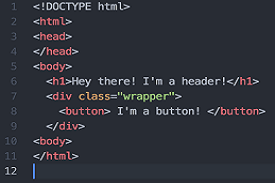



Description
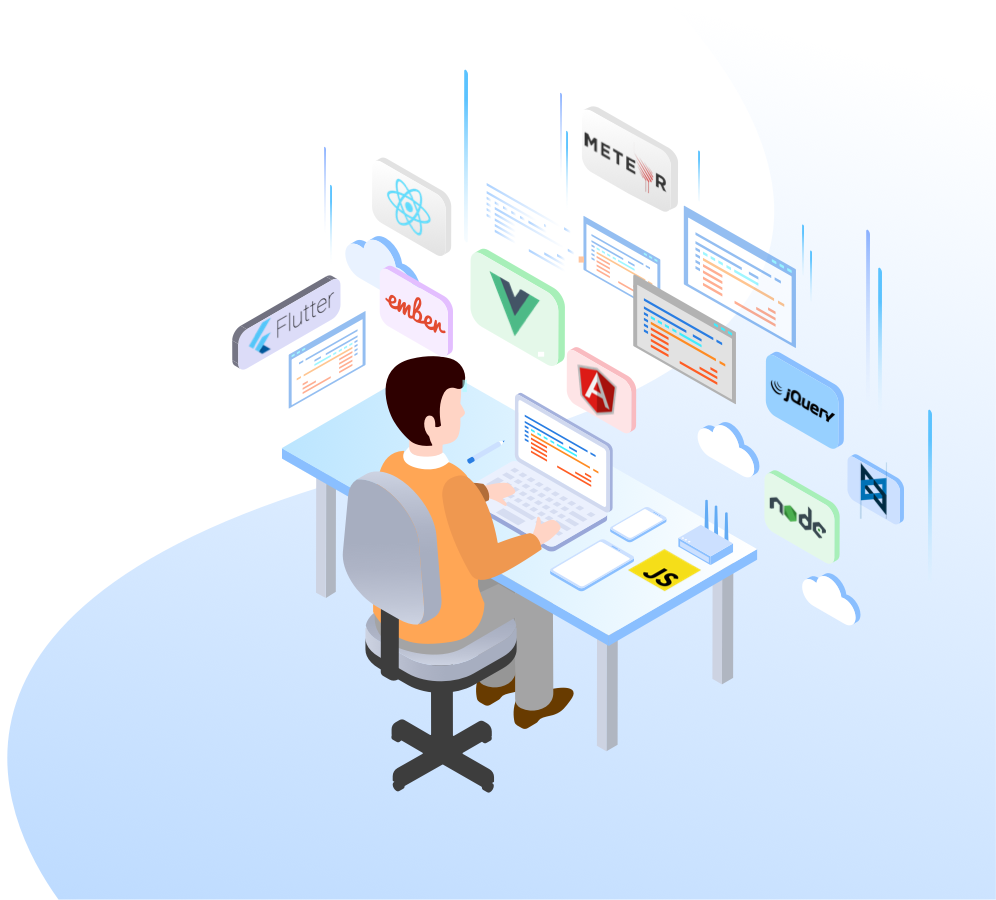 Frontend frameworks are the pioneer blocks of the software development process. But there are so many options to choose when it comes to building visually appealing apps that rank high on user experience. User experience is the number one priority for every business in the market today. As a developer, even the brief you get on your project talks about the simplicity of the user interface it is supposed to feature. No matter how complex functions and operations happen in the background, what users see and experience has to be seamless.Take any of these websites, and you will find they are powerful, simple, and have a brilliant user interface. All thanks to the myriad of frameworks running under the hood. However, with the increasing demands of customers and the market, there is a constant need to push the quality in terms of usability and functionality. That’s when concerns start popping up.
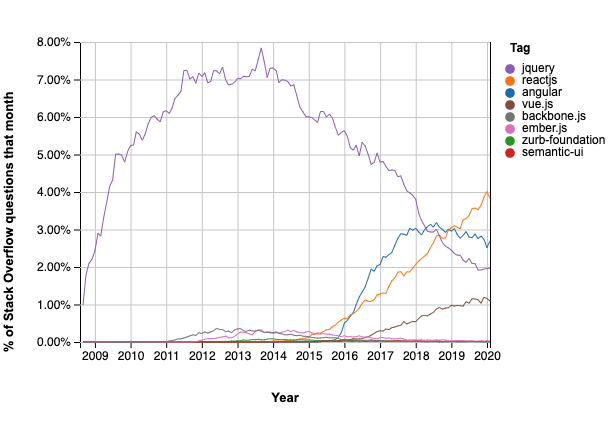 Talking about the relative popularity of each framework, the below graph shows the overall usage popularity of each framework listed for best frontend frameworks in 2020. We can see that after the year 2015-16, Angular and React have been in huge demand. When it comes to jQuery, it has always been in demand. The reason being, jQuery still performs wonderfully when you don’t need to use giant frameworks like Angular and Ember but need faster development with minimum functionality. Let’s see how each framework defines itself in its current state and how we should select each for our future development requirements in the next section..